01
Janitorial Services
Regular cleaning for work areas, breakrooms, restrooms, floors, and waste stations, on a schedule set room by room.
View details
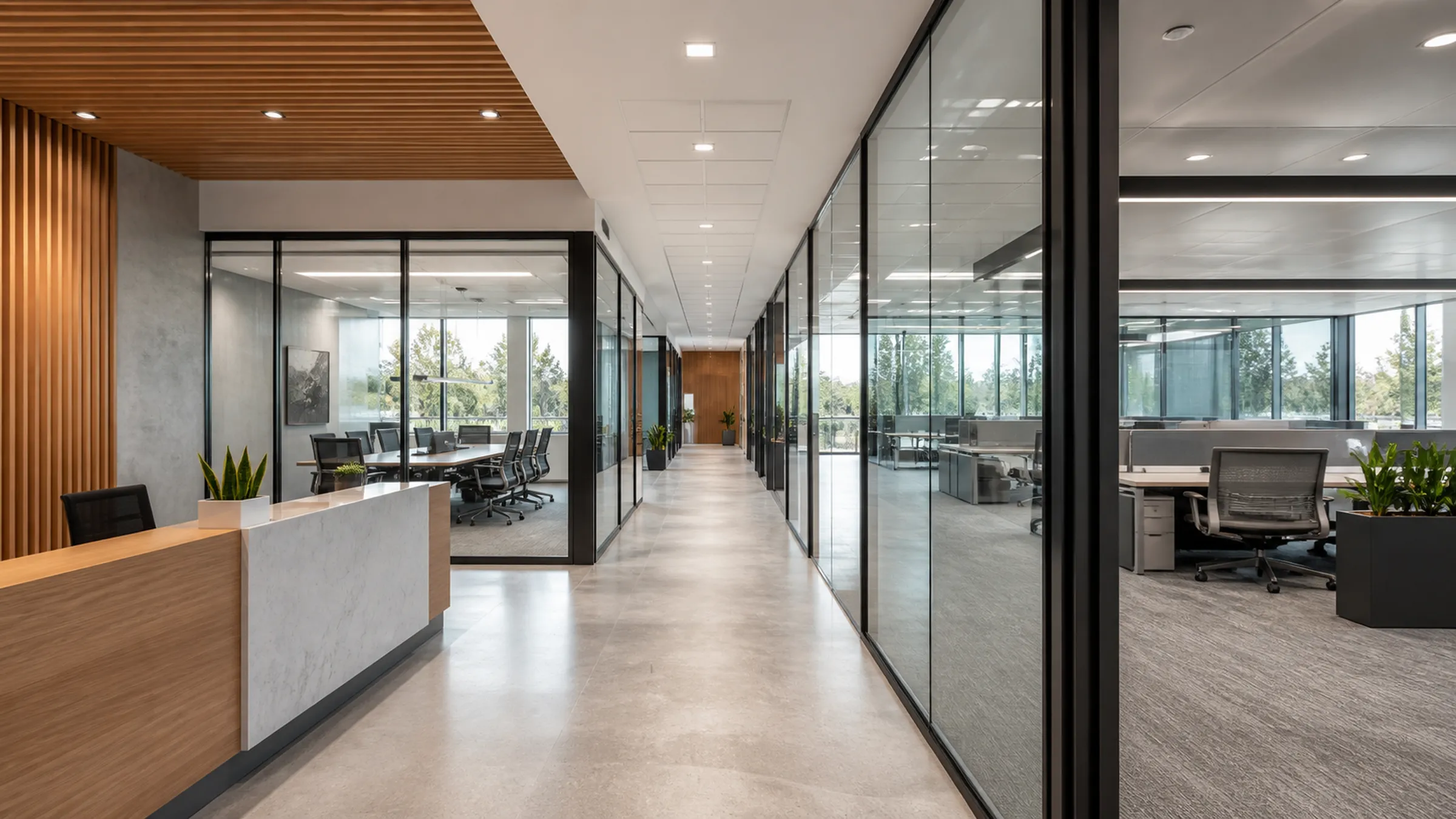
Cleaning for Concord businesses
Keep your commercial property clean with a janitorial plan shaped around its rooms, traffic, access, and operating hours. Concord Janitorial coordinates recurring care for the shared spaces people notice and use throughout the day.
Choose the service that fits your property, then coordinate the tasks and frequency around how each space is used.
01
Regular cleaning for work areas, breakrooms, restrooms, floors, and waste stations, on a schedule set room by room.
View details02
Cleaning for the customer, employee, and shared spaces of storefronts, multi-tenant buildings and other public-facing properties.
View details03
Consistent attention for reception, offices, meeting rooms, kitchens, and restrooms, so your office is ready every morning.
View details04
Daytime cleaning attention for busy entries, common areas, restrooms, and shared spaces while your building is open.
View details05
Regular and scheduled cleaning for the carpet and hard floors people use every day, from routine mopping to stripping and waxing.
View details06
Careful cleaning for exam rooms, waiting areas, offices and restrooms—a clear fit for medical and dental practices.
View details07
Cleaning shaped to how your property runs, from offices and schools to storefronts, warehouses and clinics.
View details08
Spot treatment and hot-water extraction that lift embedded soil and keep Concord carpets looking fresh.
View details09
Storefronts, shared walkways, restrooms and common areas kept guest-ready for shoppers and tenants.
View details10
Pressure washing for entries, walkways and building exteriors that gives your property a clean first impression.
View details11
Dust, debris and residue cleared after construction so your new or renovated space is ready for move-in.
View detailsFacility fit
Concord Janitorial serves business interiors that include lobbies, offices, restrooms, breakrooms, and floors. The right routine reflects how often each area is used and when cleaning can take place.
Entrances, interior glass, and floors remain visible priorities.
Busy restrooms and entryways can receive more frequent attention than low-use rooms.
Cleaning happens while you are open or after you close, whichever suits each room.
Service area
Concord, Martinez, Pittsburg, Pleasant Hill, Walnut Creek
Concord Janitorial works across central Contra Costa County, and each city has its own mix of buildings. Concord pairs downtown offices with retail and light industrial sites, Walnut Creek adds professional offices, healthcare and hospitality, and Pleasant Hill brings retail centers and education-related properties. Martinez is home to county, professional and healthcare offices, and Pittsburg centers on offices, waterfront businesses and administrative spaces tied to industry.
Wherever your building sits, the starting point is the same. We walk the property, note which rooms carry the most traffic and when they sit empty, and turn that into a written task list you can review. Entrances, interior glass and floors stay near the top, because those are the areas visitors notice first.
The first conversation is about how your building actually works. During the walkthrough we note where people come in, which rooms fill up first each morning, where waste collects and which areas sit quiet most of the week. Those observations become a written task list organized room by room, so you can see exactly what happens in the lobby, the restrooms, the breakroom and each office before service starts.
Frequency is set area by area rather than for the whole building at once. A busy entry and a shared restroom earn a spot on every visit, while a storage room or a rarely booked meeting room moves to a lighter rotation. Consumables are restocked each visit, so soap, paper and liners are in place when your staff walk in.
Specialty work joins once the recurring routine is running. Carpet traffic lanes get hot water extraction over a weekend, hard floors are scrubbed or recoated on a periodic calendar, and the walkways and dumpster enclosures outside are booked for commercial pressure washing as a project of their own.
Because every service sits on the same written plan, a property manager sees the nightly routine, the daytime porter rounds and the periodic floor work side by side. Offices, medical suites and retail centers each get a different mix, built from that same first walkthrough.
Services
A few useful answers
Yes. We clean during occupied hours or after hours, matched to building access and to when employees and visitors use each area.
Pricing reflects the property's size, layout, and traffic. Access hours, service cadence, and selected tasks also shape the quote.
A janitorial plan takes in the entries, offices, shared rooms, restrooms, and break areas you select. Interior glass and floors can join the list too, and the final task list covers the areas you choose.
We update your task list and schedule, so busy entries and shared rooms keep getting cleaned as often as they need.
Share the building type, approximate square footage, operating hours and the areas that matter most. We use them to plan the walkthrough and prepare your quote.
Yes. Janitorial, commercial, office, porter and floor care services are offered in Concord, Martinez, Pittsburg, Pleasant Hill and Walnut Creek, with each plan built for the specific property.
Our planning guides cover porter versus nightly service, office task lists, floor care and 2026 costs. When you are ready, the contact page has the quote form.
Janitorial service is the recurring routine for work areas, restrooms, breakrooms, floors and waste stations. Commercial cleaning looks at the whole property, customer side and employee side together, and brings porter, floor and exterior work in alongside that routine.
Before opening, during occupied hours, in the evening, early in the morning or on weekends. The window is chosen per area, so a lobby is ready before doors open while back offices are handled after hours.
Services