
Guide
Lobby to break room: what Concord office cleaning covers
Here is what recurring office cleaning covers in each room, which tasks belong on a periodic calendar, and what to tell the crew before the first visit.
Start with how your team uses each room
A Walnut Creek professional office and a Pittsburg administrative office tied to an industrial operation both have a reception area, desks, a kitchen and restrooms, yet they use those rooms very differently. The Walnut Creek office hosts clients in a polished lobby and conference room, while the Pittsburg office sees staff in work boots coming in from the floor all day. A useful plan starts from those habits rather than a generic list.
Concord Janitorial builds the task list during a walkthrough of the office, the first step of our office cleaning service. Each room is noted by use, traffic, surface and who restocks supplies, then given its tasks and a frequency. The sections below follow the order most crews work an office, from the front door to the floors underfoot.
Entry, reception and workstations
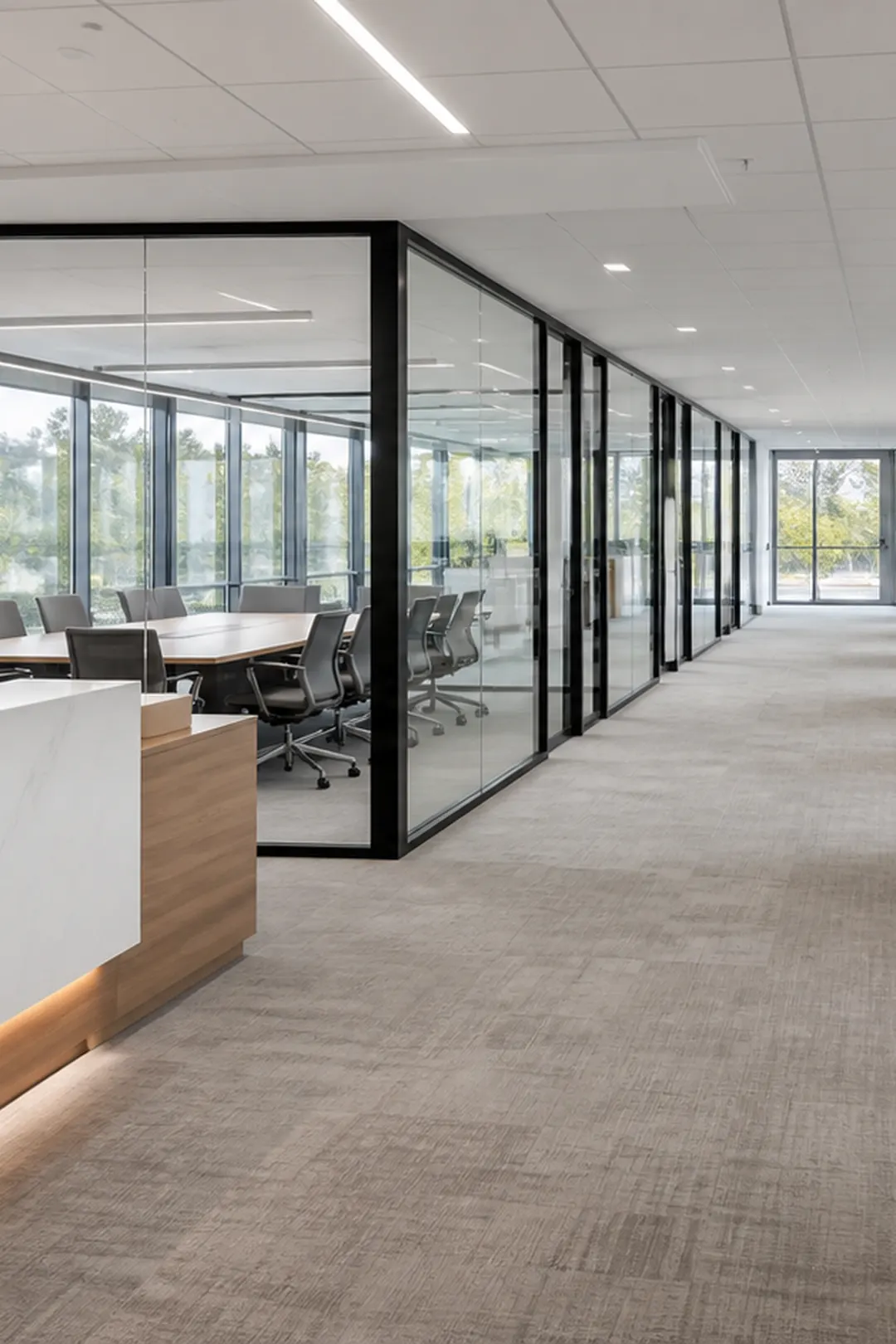
Reception sets the tone for every visitor, so it sits on every visit. Entry glass and door pulls are cleaned, counters and visitor seating wiped down, chairs straightened and the floor vacuumed or mopped to suit its surface. Walk-off mats at the door are vacuumed so they keep trapping grit instead of releasing it onto the carpet behind them.
Workstation areas get trash and recycling emptied and carpet vacuumed along the aisles and under reachable desk space. Desk surfaces are where offices differ most. Some teams want clear desks wiped on each visit; others keep papers out and would rather the crew leave desktops alone. Tell the crew which applies, and point out monitors, docking stations or personal items that should stay where they are.
Private offices follow the workstation routine on their own frequency. An executive office that hosts meetings belongs on every visit, while an office used only part of the week can drop to a lighter schedule.
Meeting rooms, kitchens and breakrooms
Meeting rooms collect the evidence of a busy day: cups, marker dust, crumbs from lunch meetings and chairs pushed in every direction. A recurring visit clears trash, wipes tables and chair arms, cleans whiteboard trays when the team wants it, and resets the room so the first meeting of the morning starts fresh. Rooms booked for client presentations deserve a spot on every visit.
Kitchens and breakrooms often shape how employees feel about the whole office. Counters, sinks, tables and the fronts of refrigerators, microwaves and coffee machines are cleaned, bins emptied and relined, and the floor mopped. Refrigerator cleanouts and microwave interiors work best on a fixed day of the week so staff know when to clear out their containers.
Restrooms and restocking
Restrooms are the room people judge fastest. Each visit covers toilets, urinals, sinks, counters, mirrors, the partition surfaces people touch, and the floor, with trash removed and dispensers refilled. Consumables are restocked on every visit, so soap, paper towels, toilet paper and liners are in place when the team arrives.
Tell the crew whether your office buys its own restroom products or wants them sourced, where the supply closet is, and which restroom takes the heaviest use. In a multi-tenant building in Concord or Pleasant Hill, note which restrooms belong to your suite and which are shared, since shared rooms usually fall under the building’s own plan.
Floors: the recurring routine and the periodic calendar
Routine floor care stays on the recurring list. Carpet is vacuumed and hard floors are swept and mopped on each visit, with traffic lanes, entries and kitchen floors getting the closest attention. That routine keeps soil from grinding into carpet fibers or dulling a finish between deeper treatments.
Deeper work runs on its own calendar through floor care. Hard floors in lobbies and hallways are burnished, recoated or stripped and waxed as their finish wears, and restroom and kitchen tile is machine scrubbed to lift soil from the grout. Carpeted rooms receive spot treatment and hot water extraction through commercial carpet cleaning once vacuuming alone stops bringing the traffic lanes back.
Keeping these treatments off the nightly list stops the routine visit from being stretched over work it was never built for, and it lets each deeper treatment land in a weekend or evening window when the office is empty. Our guide to stripping, refinishing and carpet extraction explains the signs that each treatment is due.
What to tell the crew before the first visit
A short briefing at the start of service saves weeks of adjustment. Share the cleaning window, the alarm and entry procedure, the rooms that stay locked and any items that should never be moved. Once those details are part of the plan for office cleaning, each visit follows the same order and the office manager has a written list to check it against.
A few useful answers
Quick answers.
Which rooms in an office need attention on each visit?
Reception, restrooms, kitchens and heavily booked meeting rooms, since they show a full day of use by the next morning. Private offices and quiet rooms can follow a lighter frequency.
How are desks handled during a cleaning visit?
The crew follows your team’s preference: clear desks wiped each visit, or desktops left alone with only trash and floors handled.
Where does carpet extraction fit in an office plan?
It runs on a periodic calendar separate from the recurring visit, booked for an evening or weekend so the carpet dries before staff return.
What should the office manager review after the first few weeks?
The rooms that still look worn by Friday afternoon. Those rooms get a higher frequency in the plan.
Industries
Related industries
Services