
Carpet care
Commercial Carpet Cleaning in Concord
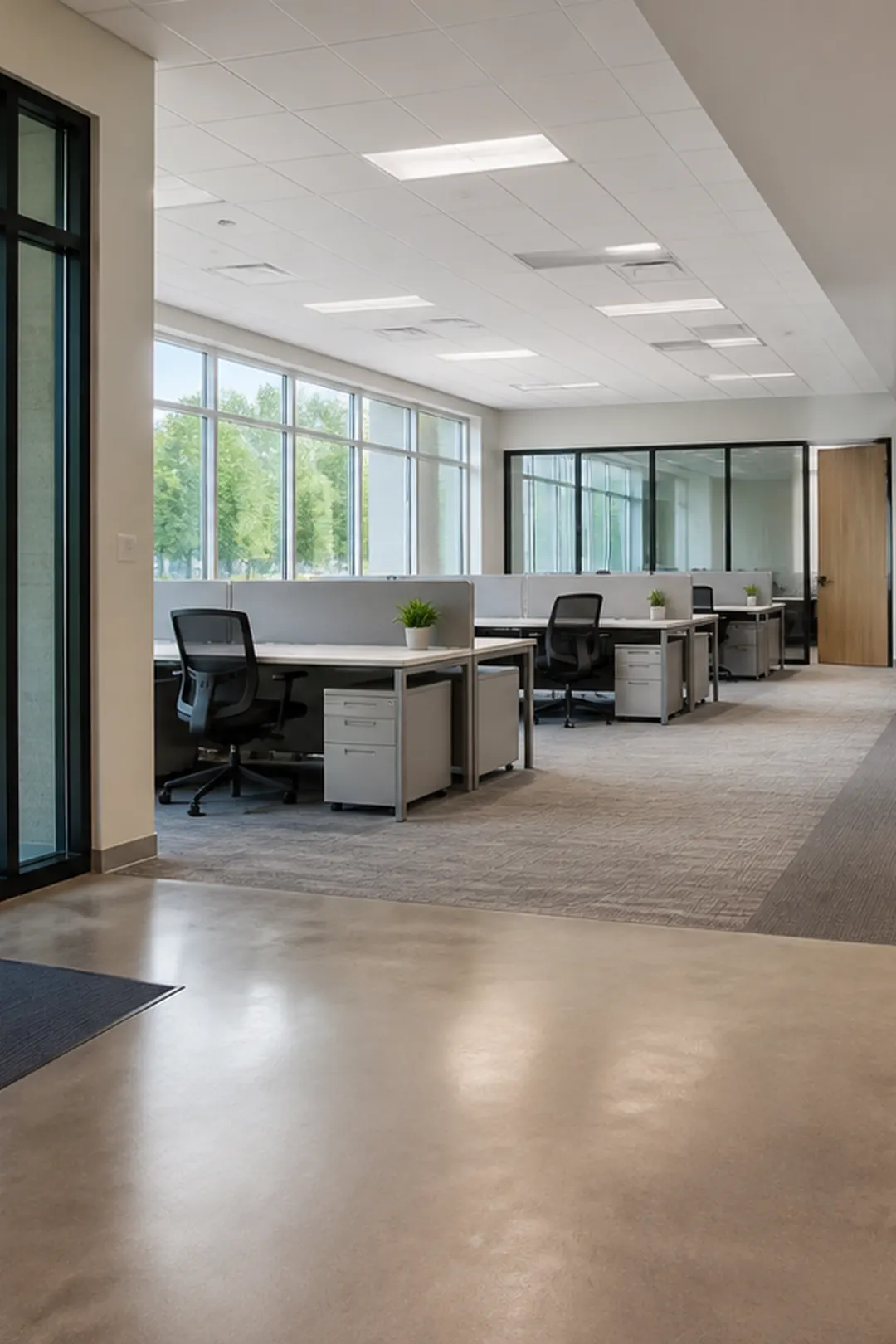
Hot water extraction and spot treatment for Concord office, clinic and retail carpet, worked zone by zone and scheduled for an evening or weekend, giving it time to dry before staff return.
How long carpet takes to dry
Drying time comes down to the carpet, the method, ventilation and the conditions inside the building. When practical, hot water extraction is booked for a weekend or other quiet stretch, giving the carpet extra drying time before employees return.
Working around your staff
We split the carpet into zones and work them in order, so open areas stay usable while treated carpet dries. When you request an assessment, mention the carpeted rooms, how they look now, any access limits and the window you prefer.
Vacuuming, spot treatment and extraction
Routine vacuuming lifts loose soil on every recurring visit. Spot treatment takes care of marks and spills, and hot water extraction pulls out the soil held deep in traffic lanes and entries. Each zone gets the method its wear, fiber and past treatments call for.
Traffic lanes, entries and spots
Carpet wears unevenly. The lanes between desks and doors, the area just inside the entry and the patch under the coffee station darken long before the corners of a room. Spot treatment handles isolated marks, while hot water extraction lifts the embedded soil that collects in those lanes over time.
Routine vacuuming stays part of office cleaning and the recurring checklist between treatments. If the carpet sits in a newly finished space, post-construction cleaning removes the construction dust before any carpet work, and hard floors elsewhere in the building can be planned together through floor care.
How often commercial carpet needs extraction
Frequency follows traffic, not the calendar. A reception carpet that takes every visitor’s footsteps and the path between the entrance and the break area show soil first, so those zones go on a shorter extraction cycle. Private offices and conference rooms that see a handful of people a day hold their appearance much longer between treatments.
Routine vacuuming on each recurring visit removes the loose grit that grinds into fibers, which stretches the time between extractions. Spot treatment deals with a coffee spill or a tracked-in mark the week it appears, before it sets. Together, those steps let the deeper work be scheduled around appearance rather than emergencies. Our guide to the signs your carpet needs extraction shows what to watch for between visits.
Carpet in Concord offices, clinics and retail spaces
Concord’s office buildings, medical offices and retail centers each put carpet to different use. Downtown office suites tend to have carpeted workstations and corridors with obvious walking paths. Medical waiting rooms carry a steady stream of patients across a small area, and retail spaces pick up heavy soil carried in from the parking lot.
Each setting gets its own zone plan. A clinic’s waiting room is treated after closing while exam rooms stay on their separate plan under medical office cleaning. Retail entries benefit from commercial pressure washing of the walkway outside on a periodic schedule, which keeps grit from reaching the carpet in the first place.
Getting rooms ready for extraction day
A smooth extraction visit starts with a clear floor. Before the visit, bins, chair mats and boxes stored under desks are lifted or moved, and anything sensitive to moisture is set up off the carpet. The zone plan shows which rooms are treated in which order, so your team knows which areas to avoid until the carpet has dried.
What carpet extraction costs for Concord businesses
Hot water extraction for commercial carpet is charged per square foot per cleaning. Published 2026 market data puts the common Concord band at $0.21 to $0.42, with broad, lightly soiled floors starting around $0.12 and small, heavily stained rooms reaching $0.66.
An office’s 6,200 square feet of carpet extracted at $0.26 costs $1,612 per cleaning, or $3,224 on a twice-yearly plan. Between full cleanings, extracting only the traffic lanes, entries and spots, about 1,500 square feet, runs $390 at that rate. For clinics and retail floors with daily foot traffic, that lighter pass works well every quarter.
Condition sets most of the price. Carpet with deep soil needs pre-treatment and extra passes, and each stain that needs separate attention adds time. Furniture to move, small private offices, clinics with carpeted rooms and retail floors that must dry before opening all raise the figure, and a weekend booking for drying time adds to it. The walkthrough records the carpeted areas, their condition, access limits and the preferred window, and the quote comes from that record.
A few useful answers
Commercial Carpet Cleaning in Concord questions
Can carpet be cleaned while the office is in use?
Yes. Rooms are treated zone by zone, so people are routed around damp carpet while the rest of the office stays open.
When is the carpet dry enough to use again?
Usually a few hours with good airflow, which is why we book evenings or weekends.
What should I tell you before carpet cleaning?
Tell us which rooms are carpeted, how worn or stained they look and when the space is quiet. Mention furniture or equipment that sits on the carpet so the crew can plan around it.
When does carpet need extraction instead of vacuuming?
Carpet needs extraction when traffic lanes and entries still look dull or soiled after regular vacuuming.
How is the cleaning method chosen?
We look at the carpet’s condition, wear, soil and spots, plus how much traffic it takes. Isolated marks get spot treatment, and dull traffic lanes get hot water extraction.
Is weekend carpet cleaning an option?
Yes. Booking extraction for a weekend lets the carpet dry while the office is empty.
Can carpet extraction and hard floor work happen in the same visit?
Yes. Carpeted offices and hard-floor corridors are planned together through floor care, with each surface treated in its own zone during one low-occupancy window.
Which carpet areas should be treated first?
Start with reception, the carpet just inside each entry and the main walking paths, because those show soil well before the rest of the room.
Industries