
Guide
When to strip, recoat or extract: floor signs for Concord businesses
Hard floors and carpet tell you what they need before anyone complains, and each sign points to a specific periodic treatment.
Read the floor before booking the work
The floor at a busy Concord retail entrance or along a long hallway in a Martinez professional building shows its condition well before anyone mentions it. Property managers who learn to read those signs can book the right treatment at the right time, instead of waiting until a floor looks tired enough that only the biggest job will fix it.
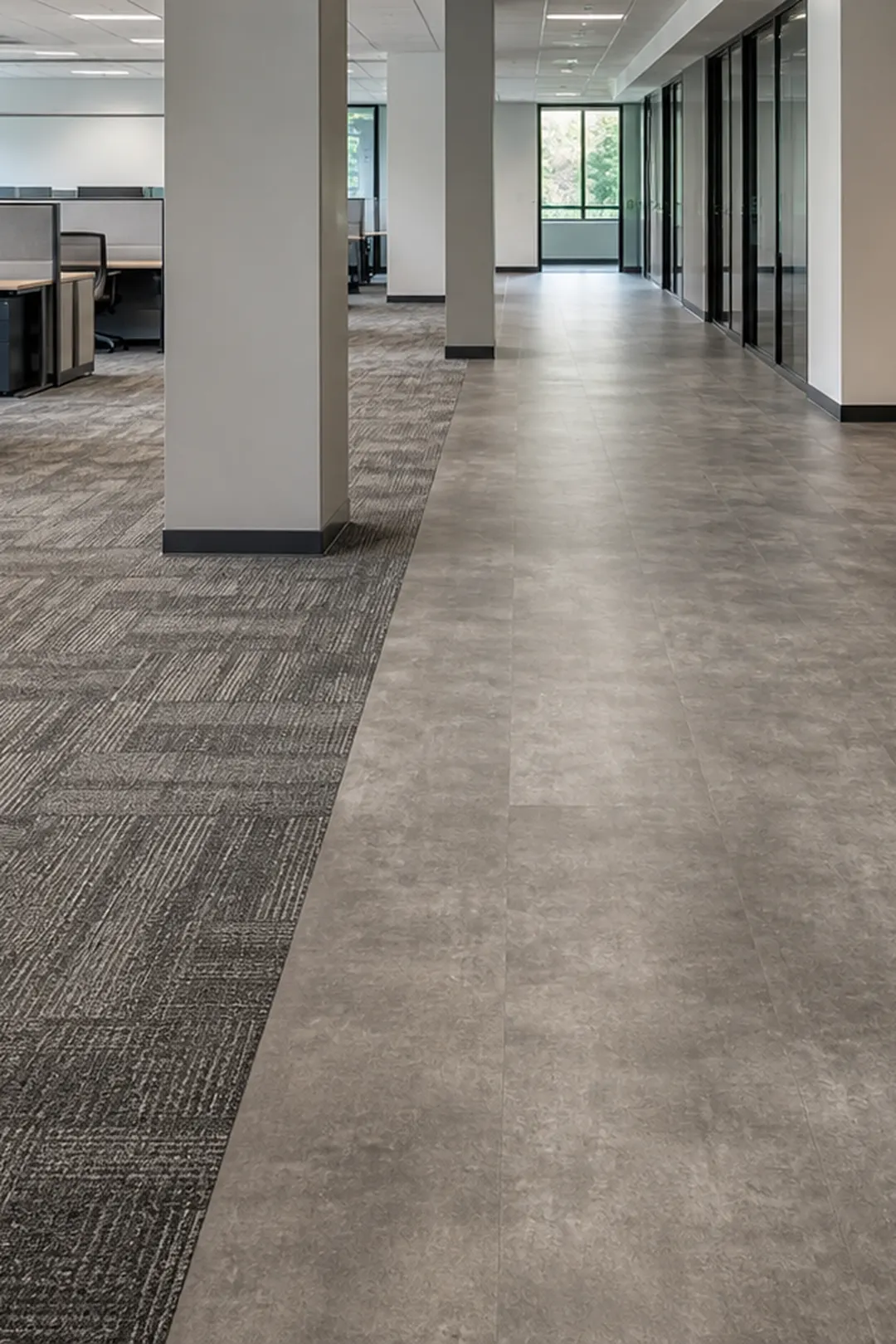
On hard floors, watch for a dull path down the middle of a hallway while the edges still shine, scuffs that mopping no longer lifts, finish that looks patchy or yellowed near the entry, and grout in restroom tile that has turned gray. On carpet, look for traffic lanes darker than the rest of the room, spots that keep returning after cleaning, and matted pile at doorways and around desks.
Each sign points to a different treatment. Matching the method to the actual condition keeps a building from paying for a full strip when a burnish would do, or from burnishing a finish that has already worn through to the floor.
Burnishing, polishing and recoating keep a finish working
Burnishing runs a high-speed machine across a finished hard floor to bring back the gloss that foot traffic has dulled. It is the quickest of the periodic treatments and works best on a regular cycle in lobbies and hallways, catching dullness before it turns into wear.
Polishing brightens a compatible floor or its finish and suits spaces where appearance carries weight, such as a reception area or a store’s front aisle. Like burnishing, it is upkeep for a finish that is still in good shape.
Recoating comes in when the finish has thinned but still covers the floor. The surface is scrubbed clean and a fresh layer of finish goes down, rebuilding protection without removing what is already there. A floor is recoated less often than it is burnished, and a recoat at the right moment pushes back the need for a full strip.
Stripping and waxing: the full refinish
Once a finish has worn through, built up into a cloudy layer or stopped taking a shine, stripping and waxing is the right step. The old finish is removed, the floor is cleaned down to its surface, and new finish is laid in coats.
Because it takes the longest and the area stays closed while the new finish cures, stripping and waxing is the treatment to plan furthest ahead. A floor usually reaches it after its finish has been through several rounds of burnishing and recoating, and the walkthrough is the moment to judge whether that point has arrived.
Concrete follows its own path. Compatible concrete in warehouses, back-of-house rooms and loading areas is scrubbed to lift ground-in soil, a good fit for Pittsburg operations spaces and the service hallways behind retail stores.
Spot treatment and hot water extraction for carpet
Routine vacuuming removes loose soil, but oily soil and spills bind to carpet fibers over time. Spot treatment handles individual stains as they appear, before they set, and keeps an otherwise clean carpet from looking neglected because of one coffee mark beside a desk.
Hot water extraction is the deep clean for compatible carpet. It flushes soil out of the pile and draws it back up with the rinse water, restoring traffic lanes that vacuuming can no longer bring back. Through commercial carpet cleaning, extraction is planned room by room with time for the carpet to dry before people walk on it again.
As a rule of thumb, carpeted entries and busy hallways need extraction more often than private offices. A plan that puts every carpeted room on one cycle tends to overspend on quiet rooms and underserve the busy ones.
Scheduling floor work around business hours
Periodic floor work needs the area clear, so it moves to evenings, early mornings or weekends. Larger spaces are worked zone by zone, one hallway or one wing at a time, with signs and routing keeping people off treated floors as the other areas carry on as usual.
A floor calendar holds it all together. Each surface is listed with its treatment and its next due date, so the different treatments stay spread out and steer clear of the property’s busiest weeks. Floor care builds that calendar, and routine vacuuming and mopping continue between visits on the recurring janitorial routine.
Retail centers fit floor work between closing and opening, medical offices after the last appointment and offices over a weekend. Newly built or renovated spaces join the calendar once post-construction cleaning is finished, so the first treatment goes onto a floor free of construction dust.
A few useful answers
Quick answers.
How often should a busy commercial hard floor be burnished?
Busy lobbies and hallways are burnished on a short cycle and quieter rooms less often. The walkthrough sets a cycle for each floor from its traffic and finish condition.
Can floor work happen in one area as the business stays open?
Yes. Treatments are planned zone by zone in a low-occupancy window, so the rest of the building stays in use.
When does a floor need stripping instead of a recoat?
When the finish has worn through, turned cloudy or yellow, or stopped responding to burnishing, a recoat no longer helps and the old finish needs to come off.
Which floors belong on the calendar first?
Entries, main hallways and restroom tile, because they carry the most traffic and show wear soonest.
Services