
Industries
Cleaning for Property Managers in Concord
Common areas, tenant suites and vacant space in Concord multi-tenant buildings, organized under one plan the property manager controls and the tenants can see working.
Common areas are the landlord’s calling card
Tenants judge a building by the parts nobody leases: the lobby, the elevator, the hallway restroom, the stairwell that smells like last week. When those spaces slip, renewal conversations get harder and the complaints land on your phone. Concord Janitorial takes ownership of the shared areas in multi-tenant buildings and gives property managers a plan that covers the landlord’s spaces and any tenant suites the owner chooses to include.
The work begins with a walkthrough alongside you or the building engineer. We map every common area, note each tenant’s operating hours and any special rules, and write a plan that separates what the owner pays for from what individual tenants may add. You review it, adjust it and sign off before the first night of commercial cleaning.
Multi-tenant buildings across central Contra Costa
The area’s leased properties vary from block to block. Downtown Concord pairs office floors with ground-level shops and restaurants. Walnut Creek and Martinez carry professional and medical office buildings with a mix of practices on each floor. Pleasant Hill has neighborhood retail strips, and Pittsburg adds administrative and flex suites tied to nearby industry.
Each building type gets a plan written for its tenant mix. If you oversee several buildings on a shared campus, our business park cleaning page explains how a multi-building site is organized. Mixed-use buildings with apartments above shops can put the commercial corridors, garage and trash rooms on one plan as well.
Lobbies, elevators, corridors and common restrooms
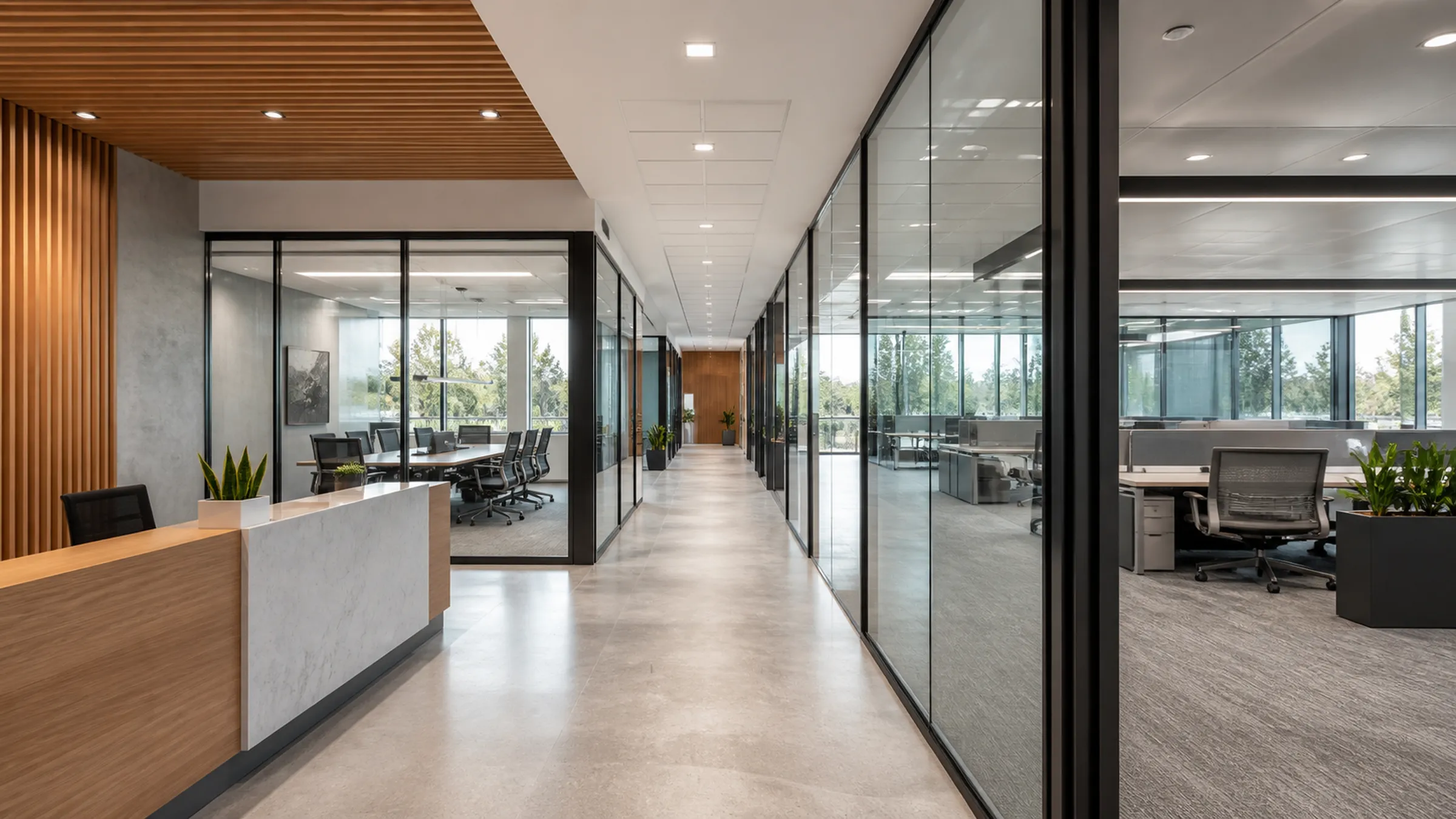
Shared spaces get the attention a tenant notices on the walk in. Crews clean entry glass and directory boards, wipe elevator panels, rails and door tracks, vacuum corridor carpet and mop hard floors, and dust ledges, vents and fire extinguisher cabinets. Drinking fountains and shared kitchenettes are cleaned, and recycling stations are emptied and lined.
Common restrooms are scrubbed, disinfected and restocked on every visit. Paper towels, tissue, soap and can liners come from our supply program or the owner’s closet, whichever you prefer. Bike rooms and shower rooms for commuting tenants can join the list. Stairwells, loading docks, mail areas and garage elevator lobbies stay on the route so the back of the building matches the front.
Tenant suites on the owner’s plan or their own
Some owners include suite cleaning in the lease; others leave it to each tenant. The plan handles both. Suites covered by the owner get a task list matched to their use, whether that means a law office, a dental practice or a retail bay. Tenants who arrange their own service can add their suite to the same crew’s route with a separate task list, so the hallway and the suite are cleaned on one visit.
For medical tenants, crews follow each practice’s protocol in exam and procedure rooms, leaving each EPA-registered disinfectant wet for its label’s dwell time, and they bring bloodborne-pathogen and HIPAA-aware conduct training to every visit.
Vacancies, turnovers and new build-outs
An empty suite still has to impress a prospect. Vacant space can be put on a light periodic refresh, dusting sills and fixtures, vacuuming carpet and clearing cobwebs and dead insects, so it photographs and shows well. When a tenant leaves, a move-out clean resets the suite for the next lease.
After tenant improvements, post-construction cleaning clears drywall dust, adhesive and debris before the new occupant moves furniture in. Lobby and corridor floors can be stripped and refinished or carpets extracted on a separate project schedule.
Building rules, access and tenant requests
Every property has its own house rules. The plan records alarm codes, key or fob handling, quiet hours for medical floors, loading dock limits and the areas crews may not enter. Night work is scheduled around tenants who stay late. During business hours, a day porter looks after the lobby and restrooms.
Tenant requests go through your office or one named contact, so you always know what was asked and what changed. A missed item goes on the supervisor’s list for the next visit, and you get a note once it’s done.
Inspections, insurance and the quote
Supervisors run quality inspections of the common areas and suites against the written plan and share their notes with you. Every crew member is background-checked. For the owner’s records we provide a certificate of insurance, and we are insured and bonded and carry workers’ compensation.
The quote is built from rentable and common square footage, floors and restrooms, the number of suites on the plan, visits per week and any porter hours or projects. A free walkthrough gives you a written quote to share with ownership. Before an owner or lender tour, a touch-up of the lobby, elevators and restrooms can be added as a one-time visit.
A few useful answers
Common questions.
Can individual tenants add their own suite cleaning?
Yes. A tenant’s suite can join the same route with its own task list, separate from what the owner’s plan covers.
Can you prepare a vacant suite before a showing or a move-in?
Yes. Book a vacant-suite refresh or a move-out clean, and post-construction cleaning after tenant improvements.
Where do tenants send requests or complaints?
To your office or the one contact named on the plan, so every request is logged and you see how it was handled.
Do stairwells, loading docks and garage lobbies stay on the plan?
Yes. Back-of-house areas are listed with their own tasks and visit days, the same as the lobby.
What helps you prepare an accurate quote for our building?
A floor plan if you have one, each tenant’s hours, any building rules, and the current task list if you’re replacing a provider.