
Industries
College and University Cleaning in Concord
College and university cleaning for campuses in and around Concord: lecture halls, libraries, residence halls, student unions, recreation centers, teaching labs and offices kept on one clear route, to your facilities office’s standard and your term calendar.
Campus cleaning for the people who run it
Concord Janitorial gives the people behind campus buildings, from the facilities director to the residence life office and the custodial lead, one crew plan for every kind of space they run. Classrooms, residence halls, dining spaces and offices each get their own task list, and the whole set runs on one schedule that follows your academic year.
A campus is a group of connected spaces that empty and fill at different hours. A lecture hall is quiet by late evening, a residence hall never fully closes, and a student union peaks at lunch. We map those rhythms first, then sequence the work so each building is ready before its own first users arrive.
Every crew is background-checked, insured, bonded and covered by workers’ compensation, supervisors run quality inspections on a set cycle, and your campus receives a certificate of insurance before work begins.
College and university cleaning across connected buildings
The short answer: crews clean by building type, with a separate checklist for each space, and your facilities office sets how often each task happens. The table shows the starting point we bring to a walkthrough.
| Campus space | What the crew handles | Usual window |
|---|---|---|
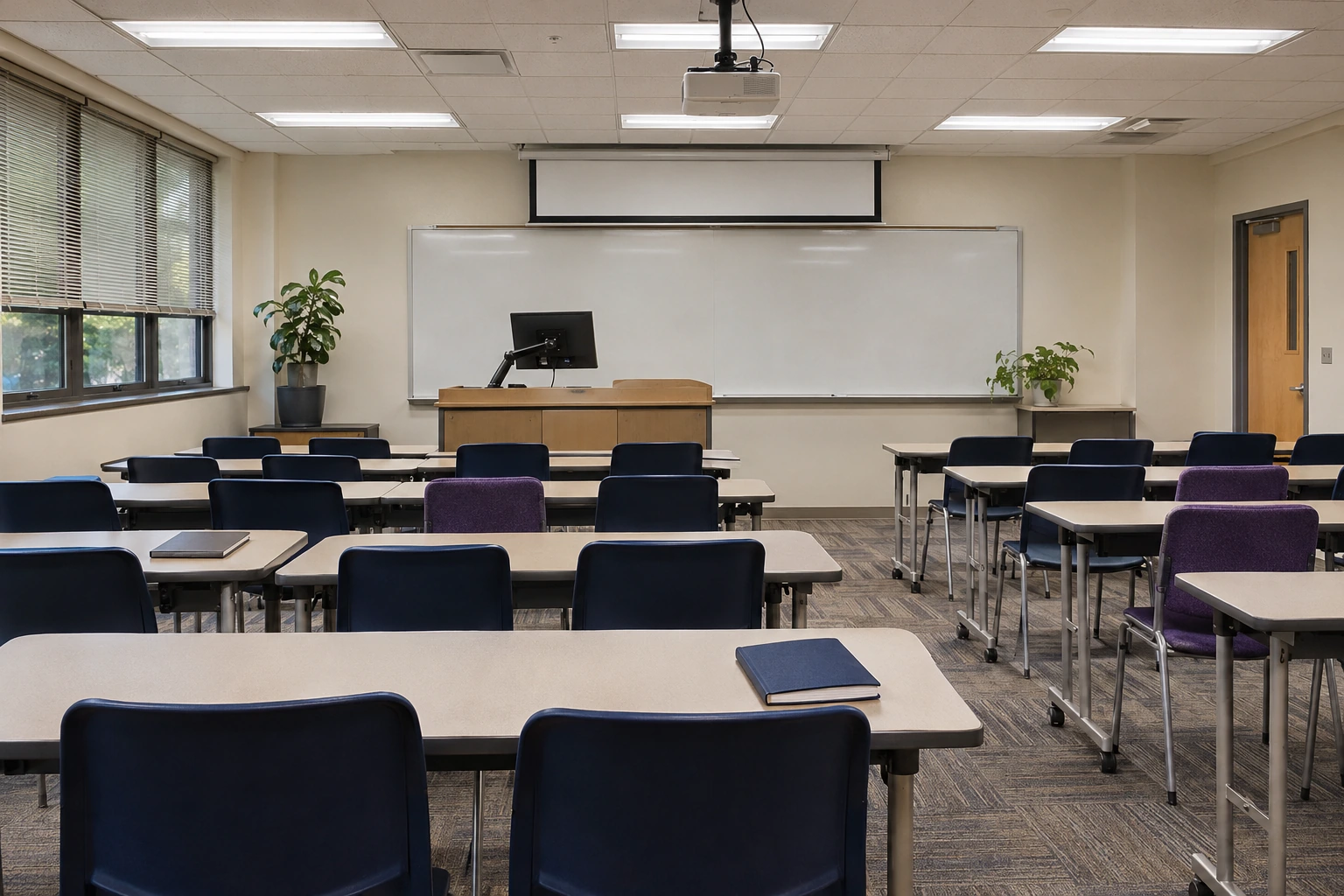
| Lecture halls and classrooms | Writing boards and marker trays, tablet-arm seats and desks, lecterns, trash and recycling, chair rows put back in line, floors | After the final evening section lets out |
| Libraries and study rooms | Reading tables, carrels, shared computer stations, door pushes, carpet in the stacks and nearby restrooms | After the building closes |
| Residence halls | Shared bathrooms, lounges, corridors, stairwells and laundry rooms in term; room-by-room turnover at move-out | Daily while students live in, in volume between terms |
| Student unions and dining commons | Dining tables and seats, lounge furniture, meeting rooms, entry glass, restrooms and seating-area floors | Between meal periods and after close |
| Recreation centers | Locker rooms, showers, high-touch equipment surfaces and court and studio floors | Overnight, or one zone at a time |
| Teaching labs | Floors, trash and recycling, paper and soap restocking, as the lab’s protocol directs | When lab staff clear the room |
| Administrative offices | Desks, phones, break rooms, copy areas, carpet and hard floors | Evenings or before staff arrive |
| Lobbies, stairwells and elevators | Handrails, elevator buttons, drinking fountains, entry mats and glass | Every visit |
Restrooms in every building get the same order of work: soil cleaned off first, then an EPA-registered disinfectant left wet for the time its label lists, then dispensers refilled. Periodic visits through our restroom deep cleaning service reach grout lines and partitions that nightly work passes over. Paper towels, toilet tissue, liners and hand soap can come from your stock or from our janitorial supplies program.
Recreation centers follow the locker-room and equipment routine on our gym and fitness center cleaning page. Preschools, K-12 schools and child care programs have their own plan on the school and daycare cleaning page.
Set your campus cleaning standard
Your campus decides how clean each building should look, and the crew works to that written standard. Many facilities teams name their target using APPA’s five appearance levels, where Level 1 is a spotless showpiece and Level 5 is a building in neglect. The level is the campus’s choice and the campus’s measure.
APPA, a professional organization for educational facilities, advises defining service levels clearly with the people who use and clean each building, so everyone knows each task and its frequency. Its cleaning operations chapter lays this out. A full campus list runs from daily tasks to annual ones such as floor refinishing. We write your frequencies into the plan line by line, and supervisors inspect each building against those lines.
Term by term on the academic calendar
The college year sets the workload, so the schedule shifts with it. During a term, nightly service keeps classrooms, restrooms and common areas on routine. If your library and study rooms run extended hours during finals, their cleaning moves to early-morning slots that stay out of the way of students.
Move-out is the biggest single push. Residence hall rooms, shared bathrooms, lounges and corridors are turned over in volume between terms, with a daily record of rooms and public areas finished so housing staff can see progress at a glance. Move-in week then gets extra attention at entries, elevators and restrooms.
Summer is when empty buildings open up for project work. Our floor care crews strip and refinish hard floors, carpet cleaning brings classroom and office carpet back, and window cleaning covers interior glass and low-rise exterior windows. A renovated wing gets a post-construction clean before fall classes start.
Event days and summer programs
Open houses, lectures, performances and conferences add work on top of routine service. That work comes in three parts: a refresh before guests arrive, with restrooms recleaned and trash cleared; trash and restroom rounds while the event runs; and a full cleanup so regular service the next morning starts on a clean building.
Send us the location, start and finish times, expected guest count and whether food is served a week or more ahead, and the extra crew goes on the schedule. For summer conference programs, residence halls are prepared before guests check in and common bathrooms, lounges and stairwells are kept up through the stay. A day porter can stay on site through a busy event day.
Access cards, keys and Safety Data Sheets
Crews follow your key, access card and safety rules exactly. If your facilities department authorizes keys for outside crews, sets an expiration date on each key or treats every credential as campus property to be returned on request, our supervisors work to those terms. Your policy decides which keys and cards our supervisors carry and how they are logged.
Background checks follow the same principle. Every crew member is background-checked, and your campus rules decide which buildings and programs each one may work in, including summer camps and other programs that serve minors.
On chemicals, California’s hazard communication standard (8 CCR 5194) expects employers sharing a building to tell each other about the hazardous chemicals their workers use, and Safety Data Sheets must be within reach during every shift. We share our product list and Safety Data Sheets with your facilities office before the first visit. Our SDS binder guide shows one way to keep them organized.
Day, swing or late-night shifts
Classroom buildings are easiest to clean after the last class, and a campus can still mix shifts.
One workable split puts late-night crews in classroom buildings and offices, with daytime coverage in unions, dining commons and libraries where traffic never really stops. Our disinfection and sanitizing service can add midday rounds on door handles, counters, stair rails and elevator buttons whenever your facilities office asks for them.
Higher education in and around Concord
Campuses around Concord keep different hours: a commuter center is busiest in the evening, a community college runs through the day, and a residential campus runs around the clock.
Concord Janitorial plans college and university cleaning for campus buildings across Concord, Pleasant Hill, Walnut Creek, Martinez and Pittsburg, from a stand-alone center with a few classroom floors to a multi-building campus with housing and a recreation center.
Get help: walkthrough and written quote
Send us your building list, your current task frequencies and your term dates, and we will walk the campus with your facilities team. You get a written plan by building, with event and summer project work priced on separate lines. Book a free campus walkthrough before you set your move-out schedule.
Common questions
Can a small campus center share a plan with a larger main campus?
Yes. Each site gets its own route and task list, matched to its hours, and both sit under one schedule and one supervisor check cycle, so standards stay the same at every address.
How do residence halls get turned around between terms?
Crews work through rooms, shared bathrooms, lounges and corridors in volume during the move-out window and keep a daily record of every room and public area finished, so housing staff can track progress and plan move-in.
Who decides how often each campus building is cleaned?
Your facilities office does. We put its frequencies into the written plan, whether a classroom gets nightly vacuuming or alternate-day floor care, and supervisors inspect against that list.
What does the crew handle in a teaching lab?
Floors, trash and recycling, and restocking of paper and soap, on the days and times the lab’s own protocol sets. Crews come in once lab staff clear the room, and every visit follows the lab’s own safety rules.
What should we send ahead of a campus event?
The room or building, the date, when doors open and close, the guest count and whether food will be served. A week or more of notice lets us staff the pre-event refresh, the rounds during the event and the cleanup afterward.
Will your crews use our keys and access cards the way our policy says?
Yes. Your key and access rules decide what our supervisors carry, how keys are signed out and returned, and which doors stay off limits, and crews follow them on every shift.